AI Shapes California Election Advertising and Voter Division
Examining how artificial intelligence influenced political advertising in California's recent elections, affecting voter perception and raising concerns about misinformation and democratic integrity.
AI News Insights
Part 1 of 2
Table of Contents
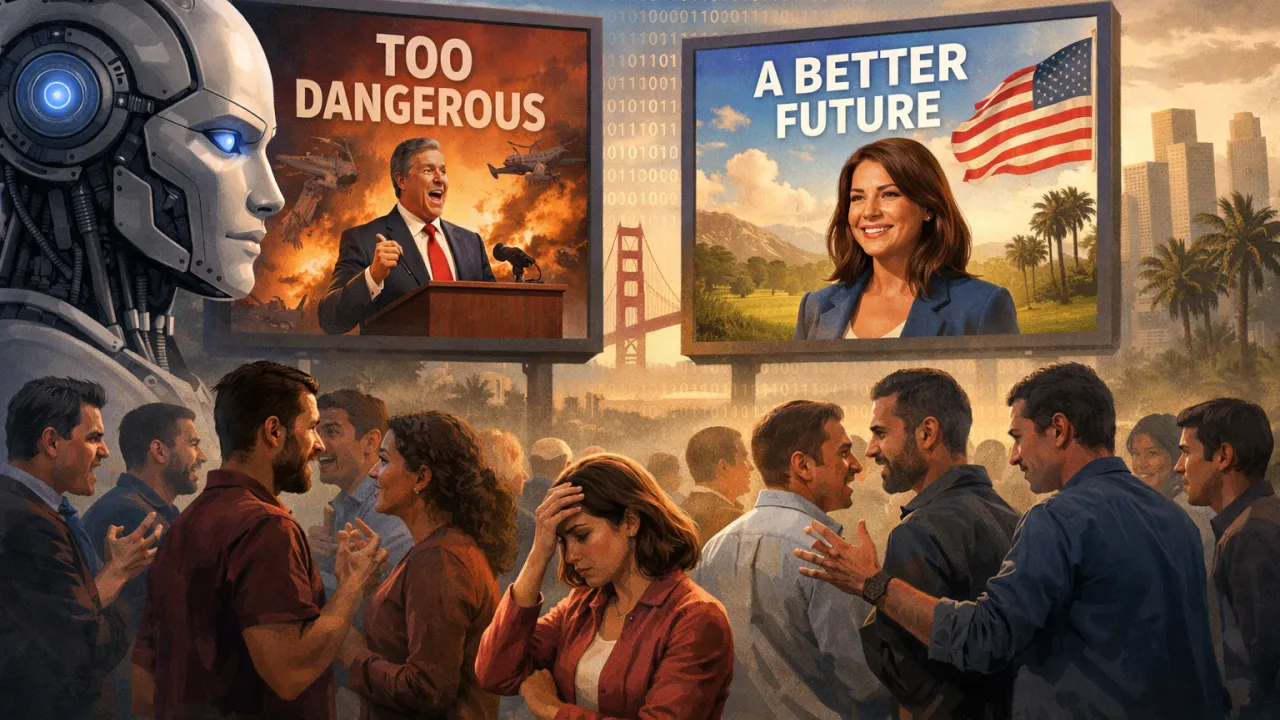
In California’s 2026 election cycle, political campaigns increasingly employed artificial intelligence to generate images and videos for advertisements, ranging from humorous exaggerations to realistic portrayals. Research from the Wesleyan Media Project indicated that over $137 million was spent nationally on AI-generated ads by mid-October, with Republicans accounting for about 80% of these messages.
Experts like UCLA professor Ramesh Srinivasan have highlighted AI’s role in creating personalized propaganda by automatically tailoring content to individuals based on extensive data, including credit card records, raising concerns about voter manipulation without clear disclosure. The lack of transparency surrounding AI-generated content complicates voters’ ability to distinguish authentic materials from synthetic ones, potentially undermining trust and democratic processes.
Calls for regulatory measures include mandatory watermarking of AI-generated media to inform voters about the nature of the content they encounter. As AI becomes embedded in political communication, it challenges the shared reality essential for democratic governance.
This analysis is based on commentary published by CalMatters on November 20, 2026.
Related Posts