
AI Advances in Reducing Global Disparities in Epilepsy Diagnosis
Exploring how AI innovations could transform epilepsy diagnosis in underserved regions, enabling early detection and equitable healthcare.
Jordan Evans
12 posts in this category
Exploring how AI innovations could transform epilepsy diagnosis in underserved regions, enabling early detection and equitable healthcare.

An agentic artificial intelligence framework using GPT-5.2 and graph retrieval accelerates health economic decision model conceptualization, reducing development time from months to days while maintaining expert-validated accuracy.

A comprehensive review of how AI technologies are being applied to prevent cardiovascular diseases, especially in settings with limited medical resources.

An artificial intelligence model achieved a perfect score by correctly answering all 40 questions in a test, demonstrating significant progress in AI capabilities.

Examining how artificial intelligence influenced political advertising in California's recent elections, affecting voter perception and raising concerns about misinformation and democratic integrity.

Canva has launched an AI-free mode that allows designers to disable generative AI features, catering to users who prefer manual graphic creation and full control over content. This marks a shift from Canva's prior AI-focused approach and addresses concerns about AI-generated content labeling and cost management.

In November 2026, the European Commission experienced a cyberattack employing the AI tool ARTEX, causing ten days of internal system outages and raising concerns over employee data security.

This article reviews the application of explainable artificial intelligence to analyze complex plasma etching processes in semiconductor manufacturing, enhancing process understanding and control.
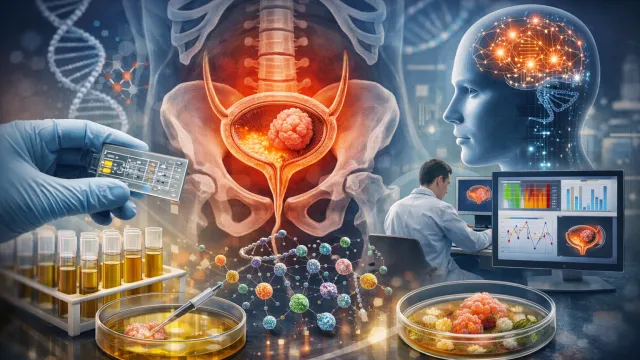
Researchers from Guilin Medical University and Zhengzhou University have proposed a translational framework combining urinary multi-omics, microfluidic sample processing, and artificial intelligence to improve detection, monitoring, and personalized treatment of bladder cancer, addressing limitations of current invasive diagnostic methods.

A new method has been introduced in which artificial intelligence (AI) reads and interprets test procedures and operations, marking a significant advancement in AI applications.