Innovative AI and Urinary Multi-Omics Framework Enhances Bladder Cancer Management
Researchers from Guilin Medical University and Zhengzhou University have proposed a translational framework combining urinary multi-omics, microfluidic sample processing, and artificial intelligence to improve detection, monitoring, and personalized treatment of bladder cancer, addressing limitations of current invasive diagnostic methods.
AI Innovations in Cancer Diagnostics
Part 1 of 1
Table of Contents
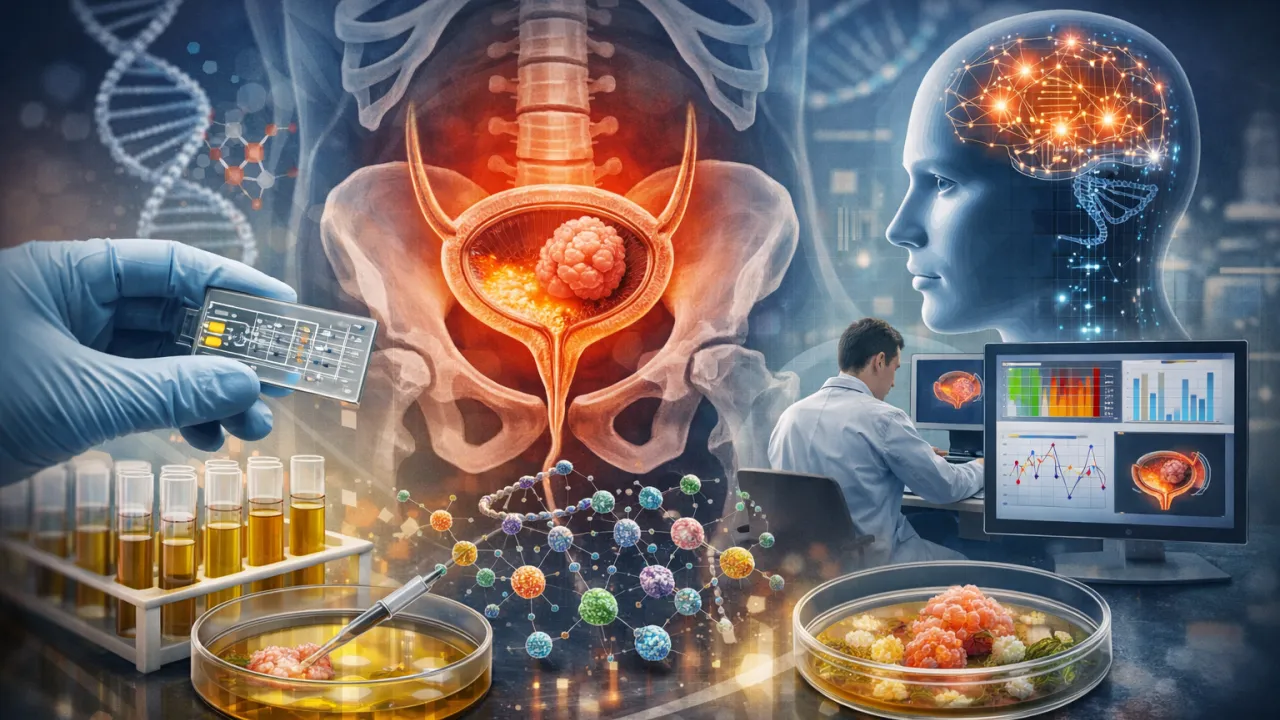
Bladder cancer, known for its high recurrence rate, currently relies on invasive cystoscopy and urinary cytology for diagnosis and monitoring, both of which have significant limitations. Researchers from Guilin Medical University and Zhengzhou University have outlined a translational framework integrating urinary multi-omics, microfluidic urine-on-chip technologies, and artificial intelligence (AI) to enhance clinical management of bladder cancer.
This approach leverages urine’s biological composition, which contains tumor-derived DNA, methylation markers, extracellular vesicles, and exfoliated tumor cells, enabling non-invasive, repeatable sampling that reflects dynamic tumor molecular changes. Molecular assays like the utMeMA methylation test and Uromonitor mutation detection have shown high sensitivity and specificity in early-stage and low-grade bladder cancer detection, outperforming conventional cytology.
The framework incorporates microfluidic platforms to standardize sample processing, reduce variability, and automate enrichment and detection of urinary biomarkers. AI-powered machine learning and deep learning models translate complex multi-omic data into diagnostic and prognostic insights, with applications including automated cytology image analysis and multimodal models predicting therapeutic responses.
Despite promising results, the authors stress the need for rigorous validation through prospective multicenter trials and standardized reporting guidelines to ensure clinical reliability. Key translational challenges include establishing standardized pre-analytical protocols, validating computational models across diverse clinical settings, and demonstrating cost-effectiveness of point-of-care microfluidic devices within existing care pathways.
Until these hurdles are addressed, fully integrated urinary multi-omic AI systems remain in the research phase. Nonetheless, this pioneering framework holds potential to reduce reliance on invasive procedures, improve early detection, and enable precision oncology for bladder cancer patients in the United States.
Related Posts