AI Advances in Reducing Global Disparities in Epilepsy Diagnosis
Exploring how AI innovations could transform epilepsy diagnosis in underserved regions, enabling early detection and equitable healthcare.
AI News Insights
Part 1 of 2
Table of Contents
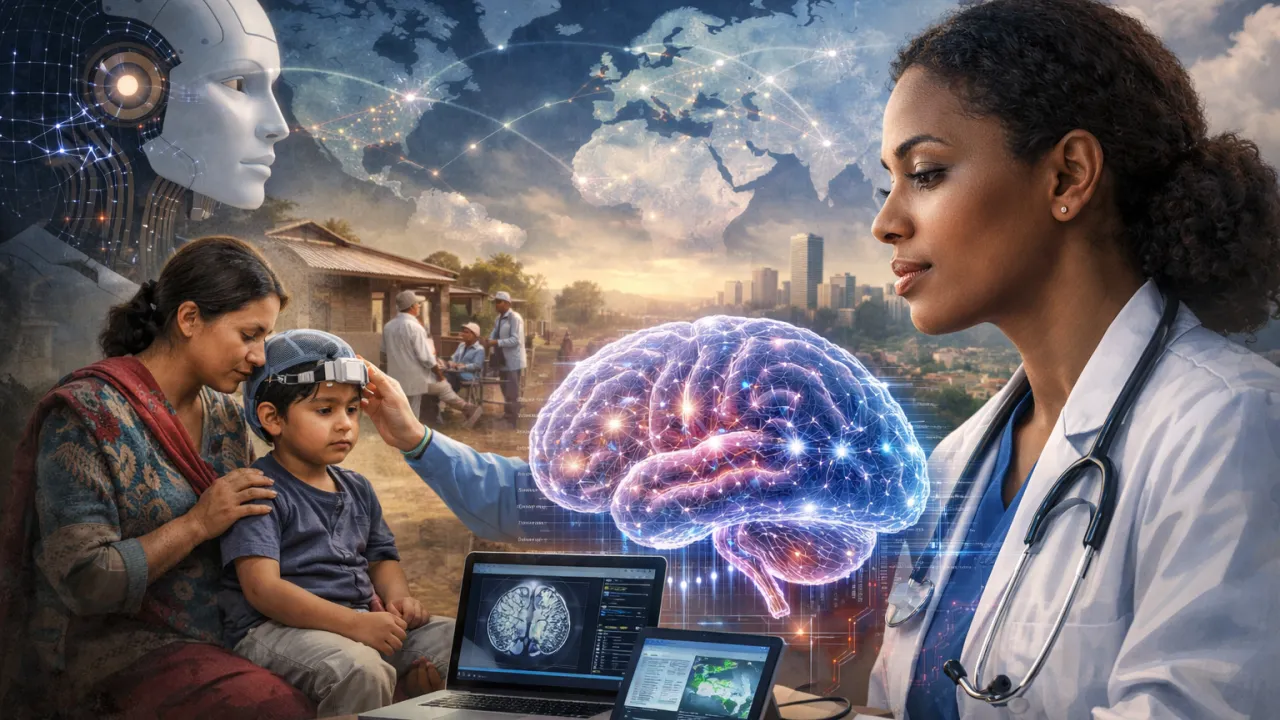
A recent review published in Nature Reviews Neurology highlights the potential of artificial intelligence to reduce disparities in epilepsy diagnosis worldwide, especially in low- and middle-income countries with limited neurological resources. By integrating low-cost, open-source electroencephalography (EEG) devices with deep learning models, minimally trained healthcare workers could perform initial screenings with accuracy comparable to clinical experts for specific EEG interpretation tasks.
Smartphone-based monitoring tools and multimodal large language models further enhance evaluation by combining patient histories and EEG data, potentially supporting culturally relevant care. However, significant challenges remain regarding algorithm generalizability, transparency, equity, and preservation of clinical expertise. AI diagnostic models often underperform when applied to diverse populations without local data and adaptation.
The authors advocate for a phased translational framework emphasizing rigorous hardware validation, local algorithmic adaptation, clinical trials, and sustainable scaling to ensure responsible implementation without displacing essential healthcare training. These AI-driven solutions hold promise to improve early epilepsy diagnosis and treatment access in underserved regions.
Original article by Bioengineer.org.
Related Posts